
Every month we send an email newsletter to our supporters sharing recent updates from our work. We publish selected portions of the newsletter on our blog to make this news more accessible to people who visit our website. For key updates from the latest installment, please see below!
If you’d like to receive the complete newsletter in your inbox each month, you can subscribe here.
GiveWell’s 2025 Grantmaking
Through years of deliberate groundwork, we’ve been growing our research capacity and scope in order to direct substantially more funding to the most impactful opportunities we find.
Last year’s grantmaking reflects this growth: Between February 1, 2025, and January 31, 2026, GiveWell approved $418 million in grants to save and improve lives as much as we can. This funding was directed via 131 grants to 69 organizations—more than double the number of grants and double the number of organizations from the prior year.
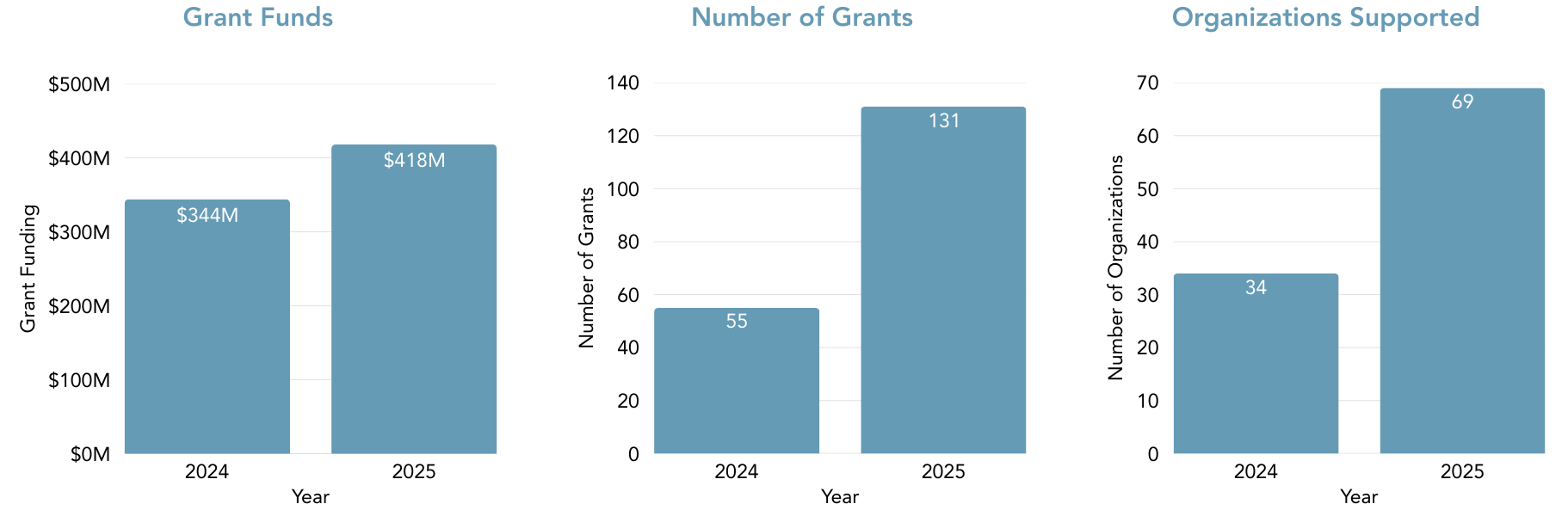
In our recent blog post, we look back at the numbers behind our 2025 grantmaking, and ahead to the ways we’ll continue scaling our work with donors this year.
Our growing research team is increasingly able to find a wider variety of highly impactful programs and cause areas to support in global health and development. GiveWell grants in 2025 supported programs across a range of cause areas in 30 countries in Africa, Asia, and the Americas. Malaria prevention and treatment was the largest area of our grantmaking over the last year, followed by vaccination programs, malnutrition treatment, and programs to provide safe water.
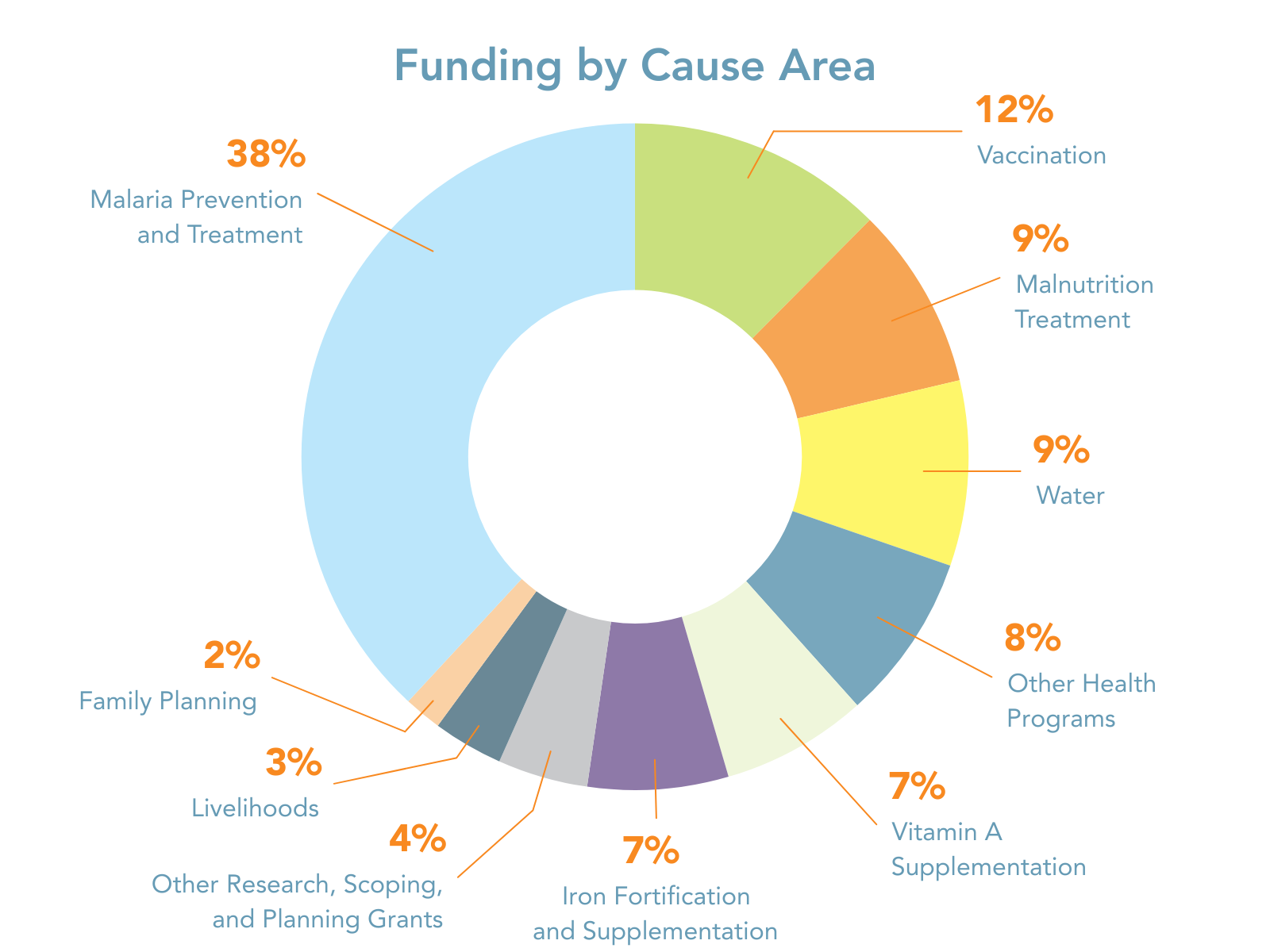
We’re grateful for the more than 30,000 donors whose generosity allowed us to direct funding in 2025 to highly cost-effective programs. In 2026, we plan to grant at least $500 million—and continue strengthening our team, systems, and processes to help people in need even more in the future.
Testing New Strategies to Increase Vaccination Coverage
GiveWell has long recognized the potential for highly cost-effective vaccine programs. We started supporting vaccination programs in 2015 and have made over $200 million in vaccination-related grants to date. Over the past several years, we’ve been laying the groundwork to expand the scope of our work and funding.
In our latest podcast episode, GiveWell CEO and co-founder Elie Hassenfeld speaks with Senior Program Officer Natalie Crispin to discuss how our research approach has evolved and what it means for helping more children access life-saving vaccinations.
Elie and Natalie cover:
- Moving from finding programs to solving problems: In the past, GiveWell primarily looked for specific, evidence-backed program types to support—such as conditional cash transfers that incentivize vaccination. Now, with a dedicated vaccines team, we ask a bigger question: What are the bottlenecks that prevent children from getting vaccinated and how can we address them?
- Building a grantmaking portfolio to maximize learning: We’ve recently funded several vaccination outreach programs and plan to fund more in differing contexts this year, which will give us the opportunity to learn quickly about what is most cost effective and direct future funding accordingly.
- Expanding capacity through specialization: Over the past three years, GiveWell’s research team has doubled in size and its structure has changed. Today, nearly 60 researchers now work on cause-specific teams—including one focused on vaccination—enabling deeper relationships with implementers, funders, and government officials.
Read our episode summary for more, and subscribe to be notified of our newest episodes.
Generating Evidence for the Future of Malaria Prevention
Seasonal malaria chemoprevention is one of the most cost-effective programs GiveWell has identified—but we have substantial uncertainties about drug effectiveness in eastern and southern Africa. That’s why we’re funding the CHAMP trial, which is, to our knowledge, the largest individually randomized trial of malaria chemoprevention drugs ever conducted.
In a recent podcast episode, GiveWell CEO and co-founder Elie Hassenfeld and Senior Researcher John Macke discuss what we hope to learn and how it could shape our malaria grantmaking.
GiveWell at SMC Alliance + Alliance for Malaria Prevention Joint Meetings
GiveWell staff have been expanding their networks by regularly attending conferences and talking with government officials, other funders, and implementing organizations. As part of this effort, much of GiveWell’s malaria research team traveled to Uganda last week to attend the Joint Meetings of the SMC Alliance and the Alliance for Malaria Prevention happening this week in Kampala, Uganda.
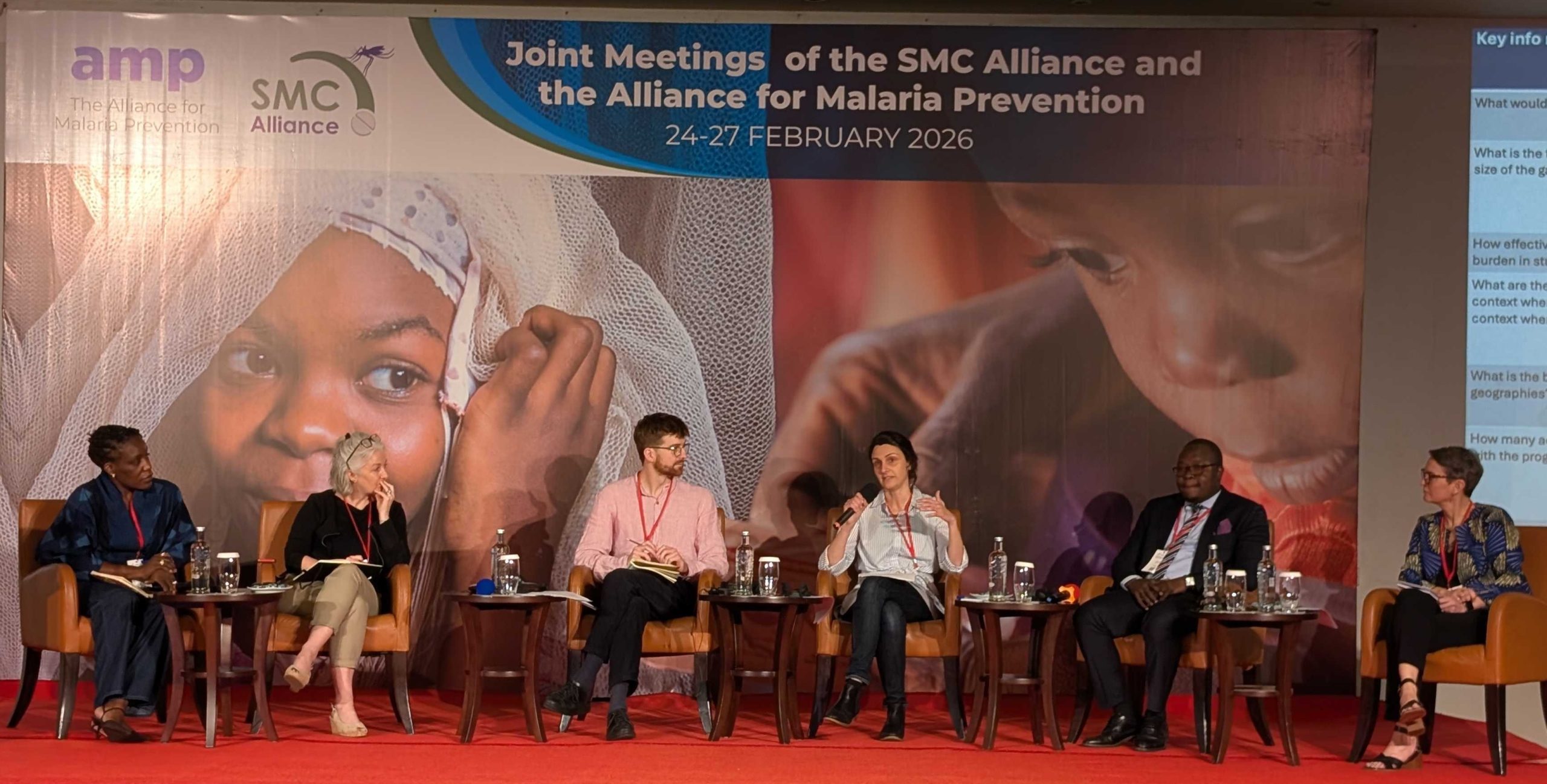
In the photo above, GiveWell Senior Program Officer Marinella Capriati discusses malaria funding with government officials and other funders on a panel at the conference. We expect to use what we’ve learned and the relationships we’ve built to strengthen our grantmaking, allowing us to help people in need even more.
Grant Spotlight
Our grantmaking supports programs and research that aim to save and improve lives the most per dollar. Here’s a look at one recent example:
Where: Far North Cameroon
What: Healthcare and malnutrition treatment for a high-mortality population (pregnant women and children under five) across 16 facilities in a conflict-affected region
Who: Alliance for International Medical Action (ALIMA)
Amount: $1.9 million
How it works: ALIMA supports government health facilities by providing essential medical supplies and equipment, paying salaries for doctors and nurses, and operating specialized treatment programs. The program delivers a range of proven interventions, from antimalarials to acute malnutrition treatment, and trains local staff in evidence-based protocols for improving health outcomes.
Why this grant: This was a time-sensitive grant after USAID funding was suddenly cancelled, putting some of ALIMA’s critical services at risk of shutting down. The grant prevented that imminent collapse, ensuring care continued for a high-mortality population where ALIMA provides about two-thirds of the trained medical staff and runs essential services, like the region’s only neonatal unit.
Funded by: Donations to GiveWell’s All Grants Fund
To learn more, check out the grant page.
Partner Roundup
- Read about the work Helen Keller Intl is doing to make a meaningful impact in 2026.
- See how door-to-door delivery of seasonal malaria chemoprevention (supported by Malaria Consortium) changed one family’s life for the better.
- Learn how fathers in northern Nigeria are increasingly taking an active role in getting their children vaccinated through New Incentives’ program.
Comments or Questions?
We’re always looking for fresh perspectives on our research. If you have comments or questions on our work, we want to hear from you! Reach out to us at info@givewell.org.