
Every month we send an email newsletter to our supporters sharing recent updates from our work. We publish selected portions of the newsletter on our blog to make this news more accessible to people who visit our website. For key updates from the latest installment, please see below!
If you’d like to receive the complete newsletter in your inbox each month, you can subscribe here.
Looking Back to Give Better
GiveWell’s research doesn’t end once we’ve made a grant. We evaluate a subset of completed grants, comparing what we thought would happen to what actually took place, then try to use what we learn to improve our future funding decisions. Over the past year, our growing research capacity has enabled us to expand this work and publish comprehensive “lookbacks” for select grants.
Our latest podcast episode illustrates why this matters. In 2021, we made a grant to Fortify Health, an organization that works to reduce anemia by partnering with wheat flour mills in India to fortify their products with iron, folic acid, and vitamin B12. We had supported Fortify Health through two smaller grants in 2018 and 2019, but we weren’t sure if the program could reach sufficient scale to meet our cost-effectiveness funding threshold. By 2021, our best guess was that if the program continued to grow, it would likely meet that threshold.
After conducting a lookback analysis to understand how the 2021 grant performed relative to our initial estimates, we found that the program was far more cost-effective than we originally estimated. Fortify Health had grown its fortified flour production 30-fold, reached more people than projected, and spent significantly less than budgeted. Based on this exciting finding, we recently renewed our support to Fortify Health with a $10 million two-year grant. The lookback also gave us a way to assess why we had underestimated the likely impact of the 2021 grant and to improve our processes so we can make better estimates in the future.
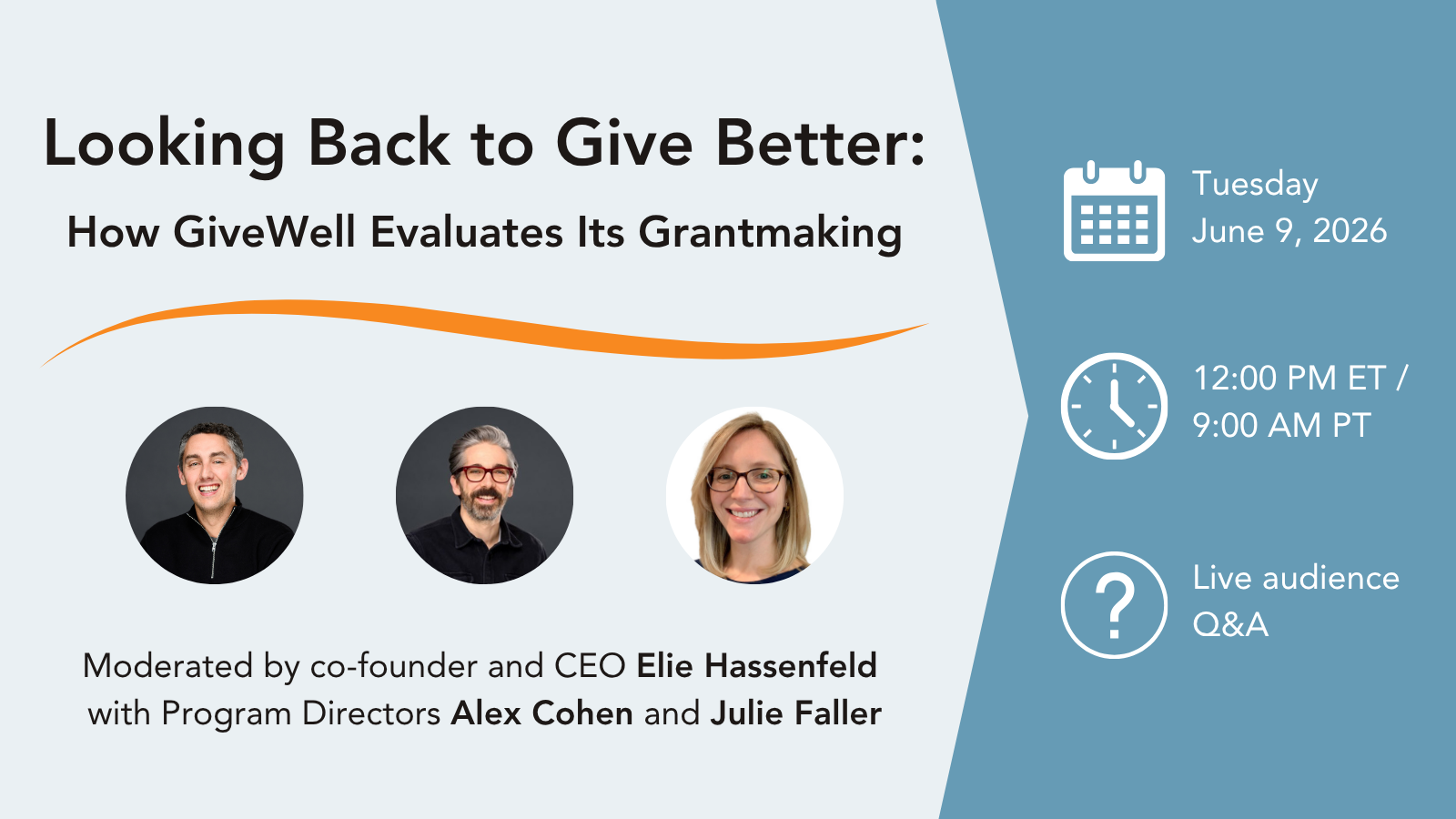
Lookbacks are a relatively new process for GiveWell—we published our first lookbacks in 2025 and have now built them into our ongoing research processes. To learn about this recent expansion of our work, join us for our upcoming webinar, Looking Back to Give Better: How GiveWell Evaluates Its Grantmaking, on Tuesday, June 9, with Elie and Program Directors Alex Cohen and Julie Faller. They’ll walk through the methodology behind lookbacks, share findings from our grant evaluations so far, and answer audience questions. Register here.
GiveWell CEO Named to TIME100 Philanthropy List
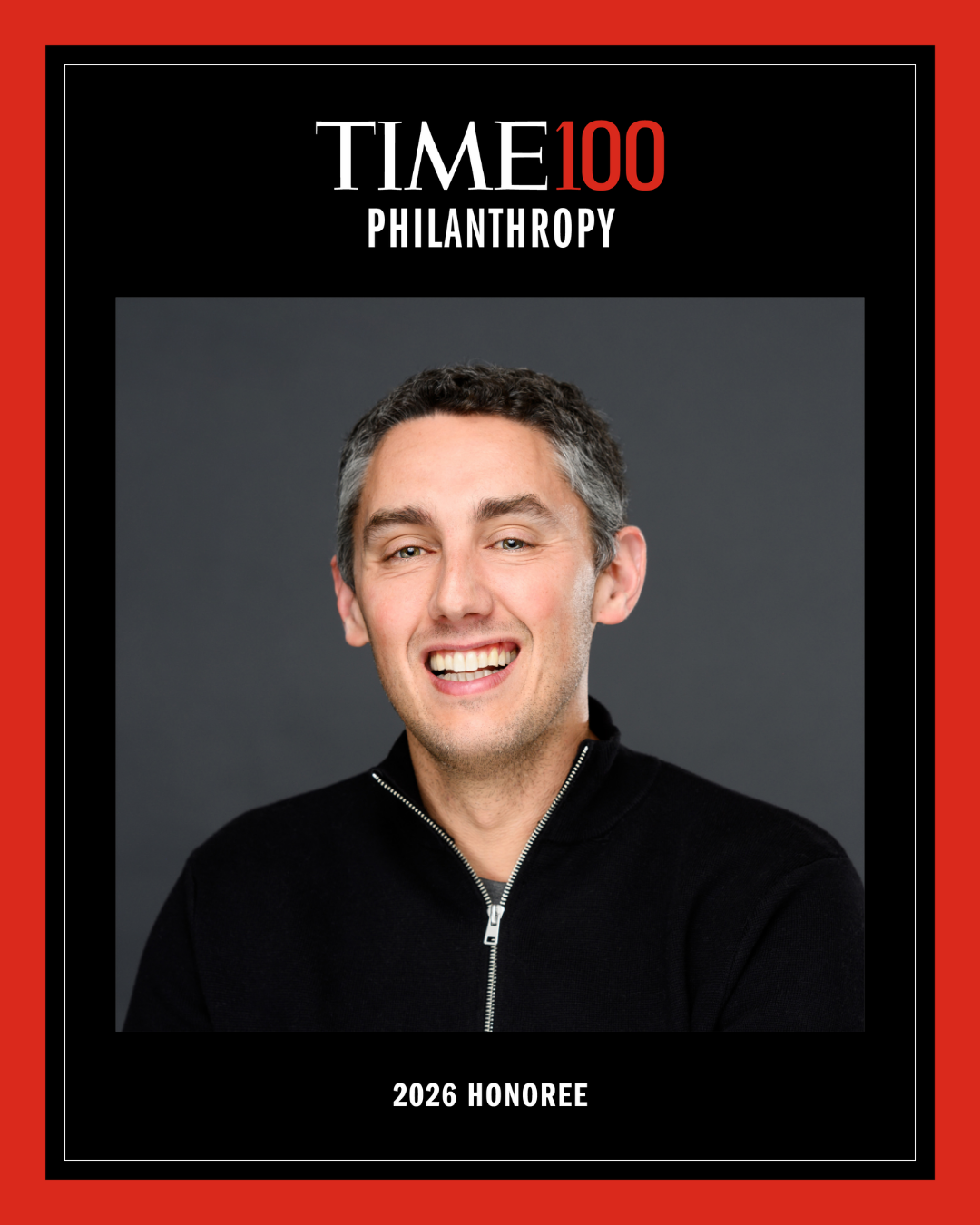
GiveWell co-founder and CEO Elie Hassenfeld was recently named to the 2026 TIME100 Philanthropy list. Last year, GiveWell directed over $400 million to programs that save and improve lives, guided by the central question that has driven us from the very beginning—where can a dollar do the most good?
Read Elie’s full profile, and see the full TIME100 Philanthropy list.
Behind the Analysis: Assessing Past Malaria Nets Grants
A recent lookback on grants GiveWell made to fund insecticide-treated net distributions supported by the Against Malaria Foundation in the Democratic Republic of the Congo (DRC) is one of our most thorough yet. We drew on multiple independent data sources, funded qualitative interviews to gather more information, and conducted a novel empirical analysis to deepen our confidence.
In our recent podcast episode, based on a conversation originally aired on GiveWell’s internal podcast for staff, GiveWell’s co-founder and CEO Elie Hassenfeld, Chief Research and Program Officer Teryn Mattox, Program Director Alex Cohen, and Researcher Steven Brownstone examine how we conducted the lookback, what we found, and how what we learned may shape our future nets grantmaking.
Elie, Teryn, Alex, and Steven discuss:
- A more expansive approach to evaluating past grants: This lookback draws on three independent quantitative sources—Against Malaria Foundation’s monitoring data, a recent Demographic and Health Survey (DHS) conducted in the DRC, and an original survey commissioned by GiveWell—alongside qualitative research from interviews of people involved in all aspects of DRC’s net distribution system.
- Our novel mortality analysis using DHS microdata: Because net campaigns roll out on staggered schedules across DRC’s provinces, we used the timing of children’s births relative to the date of local net campaigns as a natural experiment. We found that the net campaigns reduced the risk of death by around a quarter.
- What qualitative research revealed: Interviewers asked people across five provinces in DRC whether households received nets and were using nets—and if not, why not. Although we heard some anecdotes of misuse or diversion, the data suggested that nets are generally highly valued by the communities receiving them.
Read our episode summary for more, and subscribe to be notified of our newest episodes.
New RFI: Malaria Pilot Programs and Research
Submissions due June 24
We recently launched a new request for information to expand and strengthen our malaria grantmaking in Africa. GiveWell has directed more than $1 billion in donations to malaria prevention programs to date. As our research capacity grows, we’re looking for new programs and research that can help prevent more deaths from malaria and help our donors make a greater impact.
Organizations can apply through one of two submission tracks:
- Pilot programs focused on malaria chemoprevention and vector control
- Research and evaluation with potential to improve GiveWell’s future grantmaking
We hope to reach as many organizations as possible. Please share with your network and consider applying! Learn more and apply here.
Grant Spotlight
Our grantmaking supports programs and research that aim to save and improve lives the most per dollar. Here’s a look at one recent example:
Where: Malawi, Mozambique, and Uganda
What: Pilots of three variations of GiveDirectly’s standard cash transfer program
Who: GiveDirectly
Amount: $4.6 million
How it works: This grant will test three different approaches to increasing the impact of cash transfers:
1. In Malawi, pairing small grants to local businesses with household cash transfers so vendors can stock up to meet new demand
2. In Mozambique, targeting the poorest young adults with cash transfers since they may be more likely to start a business or build assets
3. In Uganda, timing cash transfers to coincide with the construction of new footbridges so recipients can access markets more easily
Why this grant: GiveDirectly’s standard cash transfer program currently falls below our cost-effectiveness threshold for livelihoods interventions, but it has a proven ability to scale. We funded these pilots to test whether specific adaptations to the program could meet our cost-effectiveness threshold.
Funded by: Donations to GiveWell’s All Grants Fund
To learn more, check out the grant page.
Hiring Announcements
Featured Role: Senior Researchers
We’re hiring Senior Researchers across three of GiveWell’s grantmaking teams—Water, Vaccination, and Livelihoods—to help direct hundreds of millions of dollars to highly cost-effective global health and development programs.
- Senior Water Researcher: Our water portfolio is beginning to pivot from a narrow focus on chlorination toward a broader exploration of the water sector. Lead research on water quality interventions, clean water delivery models, water access programs, and more.
- Senior Vaccination Researcher: Shape one of our fastest-growing portfolios—from $12 million in 2024 to $70+ million expected in 2026. Research routine immunization coverage, demand-side incentives, malaria vaccine rollout, and potentially new areas like surveillance and outbreak response.
- Senior Livelihoods Researcher: Tackle questions about cash transfers, social protection programs, education programs, and support for small businesses in low-income countries. Help us understand why large-scale livelihoods programs haven’t always moved the needle on reducing poverty rates.
We’re also hiring a Senior Cross-Cutting Researcher to work on the thorniest methodological questions that cut across all of GiveWell’s research, including how we think about cost-effectiveness, uncertainty, and impact. Our Cross-Cutting team works across all program areas and serves as an internal check on our reasoning.
Partner Roundup
- See how New Incentives’ coverage monitoring tracks their program’s reach across northern Nigeria.
- Explore how Giving What We Can connects Peter Singer’s “drowning child” thought experiment to the evidence behind effective giving today.
- Read Malaria Consortium’s case for why strong surveillance is essential to sustaining and accelerating progress against malaria.
Comments or Questions?
We’re always looking for fresh perspectives on our research. If you have comments or questions on our work, we want to hear from you! Reach out to us at info@givewell.org.