
Every month we send an email newsletter to our supporters sharing recent updates from our work. We publish selected portions of the newsletter on our blog to make this news more accessible to people who visit our website. For key updates from the latest installment, please see below!
If you’d like to receive the complete newsletter in your inbox each month, you can subscribe here.
Growing Our Largest Research Area: Malaria
Despite significant progress over the past few decades, malaria still kills around 600,000 people annually, mostly young children in Africa. While malaria prevention has long been a focus for GiveWell, the growing capacity and specialized expertise of our malaria research subteam are now enabling us to take on this challenge in ways that would not have been possible even a few years ago.
Among our efforts, we are:
- Funding evidence generation to improve future grantmaking decisions: We’re funding new studies and strengthening monitoring and evaluation data for the programs we already support. For example, we funded studies on how long nets provide protection in Nigeria and Cameroon, which could inform how often campaigns should be conducted to maximize their cost-effectiveness and impact.
- Identifying ways to increase coverage of our core programs: With a larger team, we have been able to look for more ways to increase the number of people benefiting from seasonal malaria chemoprevention (SMC) and insecticide-treated nets. We funded a grant aimed at understanding the most significant barriers to net use and another to learn more about whether SMC campaigns could successfully expand to help more children.
- Searching for new opportunities to help more people: Despite widespread implementation of very effective malaria prevention programs, like SMC and nets, many people are still infected and die each year. To find additional cost-effective strategies that are not yet widely deployed, GiveWell’s malaria subteam recently launched a request for information from potential grantees.
For more than a decade, GiveWell has been at the forefront of malaria prevention, and we’re excited about the progress we’re making as we continue to expand this work. Read more.
“Looking Back to Give Better” Webinar Recap
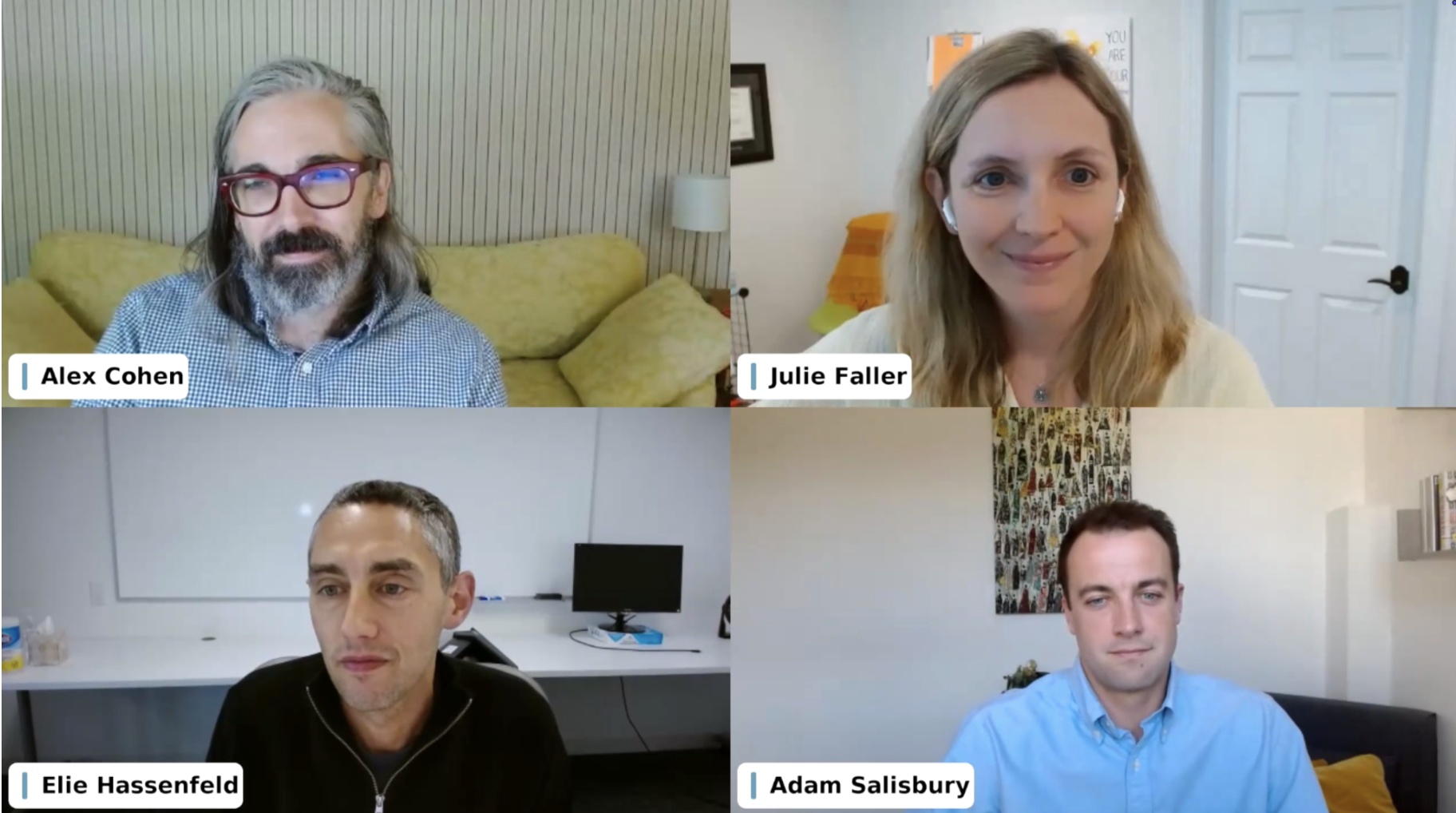
GiveWell’s latest webinar took a close look at a critical step in our research process: evaluating past grants to understand what happened, why, and how we can use what we learned to improve our grantmaking over time. GiveWell co-founder and CEO Elie Hassenfeld, Program Directors Alex Cohen and Julie Faller, and Senior Program Officer Adam Salisbury discussed four recent comprehensive grant lookbacks and answered audience questions. Read more and watch the recording.
Expanding Our Search for Cost-Effective Ways to Reduce Poverty
We’re building capacity to explore programs that increase people’s incomes—where long-term impact is harder to measure and effectiveness varies significantly across contexts. In September 2025, we created a dedicated livelihoods research subteam focused on programs that improve the economic well-being of people in extreme poverty.
In our recent podcast episode, GiveWell co-founder and CEO Elie Hassenfeld speaks with Senior Program Officer Adam Salisbury about GiveWell’s expanding work on livelihoods programs, which programs might be the most cost-effective, and research we’re funding to help answer some key questions.
Elie and Adam discuss:
- Testing variations of cash transfers: GiveDirectly’s flagship cash transfer program currently falls below our cost-effectiveness threshold for livelihoods interventions, but it has a proven ability to scale. We funded three pilots to test whether specific program adaptations could improve cost-effectiveness enough to meet our threshold.
- Exploring poverty graduation programs: These programs provide extremely poor households with a tool to generate income, such as a sewing machine, along with training and small amounts of money or food so families have what they need without selling the asset. We’re considering funding research to assess which program designs are most cost-effective, whether income increases hold up over longer time periods, and whether programs can be implemented effectively at scale.
- Funding research to address key uncertainties: By funding research tied to programs we’re considering supporting, we aim to make better funding decisions and increase donors’ impact. For example, we had a consultant scrutinize the data from a randomized controlled trial of GiveDirectly’s flagship program in Kenya—and the findings held up. We’re now funding research to assess whether the results generalize and are considering further studies to learn more about whether the effects persist over time.
Read our episode summary for more, and subscribe to be notified of our newest episodes.
Grant Spotlight
Our grantmaking aims to support programs and research that save and improve lives the most per dollar. Here’s a look at one recent example:
Where: Rwanda and Uganda
What: Technical assistance and advocacy to expand rural trailbridge construction
Who: Fika (formerly Bridges to Prosperity)
Total: Approximately $6.5 million
How it works: In rural Rwanda and Uganda, rivers and ravines can cut communities off from markets, health facilities, and schools. Fika provides technical assistance and advocacy to help governments and private construction firms build more trailbridges in rural areas—advising on contractor selection, overseeing construction quality, and advocating for increased public investment in rural bridge infrastructure. We expect the work funded by this grant to result in approximately 90 additional bridges being built.
Why this grant: We estimate that people served by bridges experience a 3% increase in annual consumption, based on preliminary results from a randomized controlled trial of Fika’s bridge program and other quasi-experimental evidence. While the bridges are relatively expensive to construct, they serve thousands of people and the benefits persist for years. This is one of GiveWell’s first grants focused on rural infrastructure as part of our expanded focus on livelihoods programs.
Funded by: Donations to GiveWell’s Unrestricted Fund
Hiring Announcements
Featured Role: Senior Researchers
We’re hiring more Senior Researchers across three grantmaking subteams—malaria, new areas, and nutrition—to help direct hundreds of millions of dollars to highly cost-effective global health and development programs.
- Senior Malaria Researcher: Shape the research agenda for our largest grantmaking portfolio. Work on questions like how new insecticides affect the cost-effectiveness of nets, what emerging prevention tools could achieve at scale, and how our portfolio should respond to new technologies.
- Senior New Areas Researcher: Explore interventions that are newer to GiveWell, from family planning and maternal and newborn health to emerging areas like medical oxygen and AI in global health. Build the evidence base to determine whether a new program meets our cost-effectiveness threshold for funding.
- Senior Nutrition Researcher: Deepen our work across our primary nutrition focus areas: vitamin A supplementation, iron supplementation, and treatment of acute malnutrition. Scrutinize program coverage and quality, strengthen our cost-effectiveness models, and expand our grantmaking into new geographies.
We have several other open positions—if you know someone who might be a good fit, please share the link and encourage them to apply.
- Senior Cross-Cutting Researcher
- Senior Livelihoods Researcher
- Senior Vaccination Researcher
- Senior Water Researcher
- Senior Accountant
- Staff Accountant
- Senior Recruiter, Operations and Outreach
Partner Roundup
- Learn how Helen Keller Intl uses vitamin A supplementation to fight malnutrition during the first 1,000 days of a child’s life.
- Read about the digital tools Malaria Consortium is studying to help protect more children against malaria in Mozambique.
- Celebrate the workers who make New Incentives’ program to increase childhood vaccinations possible.
Comments or Questions?
We’re always looking for fresh perspectives on our research. If you have comments or questions about our work, we want to hear from you! Reach out to us at info@givewell.org.
Comments
Dear GiveWell Team,
I am very pleased to have the opportunity to contact you. I am writing from Africa, specifically Ethiopia.
I have been truly impressed by the important work your organization is doing and the positive impact you have made around the world. Your commitment to improving lives and supporting communities in need is inspiring, and I greatly admire your dedication and achievements.
Thank you for the meaningful contributions you continue to make. I look forward to learning more about your work and any opportunities to engage with your organization.
Kind regards,
Zakaria Ahmed Jerar