
I did what is apparently known as “astroturfing,” using a fake ID to try to get attention for GiveWell. Why did I do this?
1. I had a horrible lapse in judgment.
2. I have been low on sleep, and running around like a madman. I’d like to think that had something to do with it, but if you want to dismiss that and just call me an idiot, I can’t argue with you.
- I used an old Ask Metafilter account to pose a question about where to find a good charity (the kind of question I was asking everyone I knew a year ago), then I created a new account as Holden0 to answer it with GiveWell (I didn’t intend to hide the fact that the GiveWell link itself came from me, the founder of the project – but posing the setup question as an outsider was completely inappropriate).
- I made two blog comments and sent ten emails from a handle that did not identify me.
- I also made numerous other comments from a handle that did identify me (“Holden”), but did not put up front that I was the founder of the project.
The gory details are here. The current status of the situation is here.
This was a horrible lapse in judgment. I was simply trying to make comments that would not be immediately dismissed as “plugs,” but rather explored on their merits. I now recognize that by not disclosing my identity, I created the appearance of an “objective” observer, and that was wrong.
I hope as you read this, you can identify with having a horrible lapse in judgment. Everything that is true of me is something that has been untrue of me in a moment of weakness, and that includes the value of honesty, which remains the most important one. I hope you can recognize that the best thing I can do is admit it immediately, apologize, and not try to hide anything. That is what I am doing. I hope you still believe in me as someone who will admit to his lapses and mistakes, if not someone who can be counted on to be free of them.
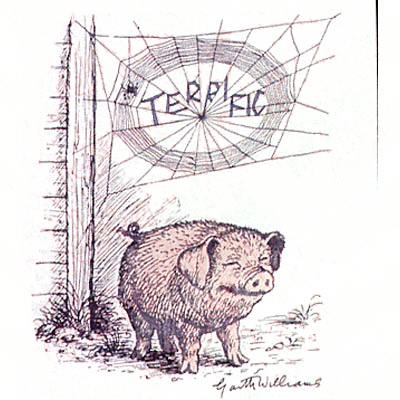 Transparency is a really big deal to us because we believe that no matter how much we learn and no matter how hard we work, we can always be wrong. That’s why we invite as many people as possible into the conversation.
 Measurement is about inviting someone else into the conversation: The Facts. The Facts have a lot to say, and they often contradict what we would have thought. That’s why we have to listen to them. Like transparency, measurement takes a lot of extra effort and expense; like transparency, it can’t solve all your problems by itself; and like transparency, it’s easily worth it if you agree that the issues are extremely complex, and that no matter how much sense something makes in your head, The Facts might disagree.
 To a lot of people, humility means speaking with a certain tone of voice, or just plain keeping your mouth shut. If that’s what you think humility is, we don’t have it. To us, humility is constantly saying “The things that make sense to me could be wrong – that’s why I’m going to do everything I can to test them, against others’ ideas and against reality.” Instead of being silently dissatisfied with charity, we’re loudly dissatisfied, so that anyone who disagrees can respond. Instead of happily assuming our dollars are doing good, we demand to see The Facts, so they can respond too.
 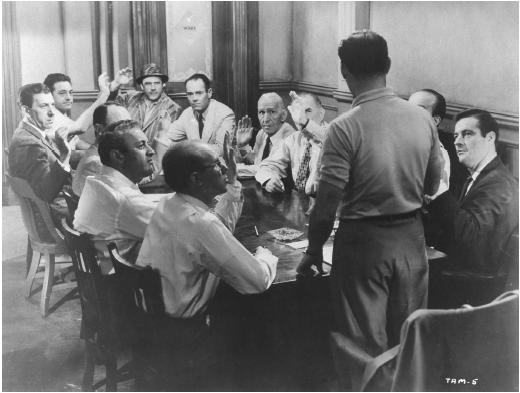 Audio for last Monday’s board meeting is on the way; in the meantime, here’s a summary. The meeting ran about five hours and had heated arguments, tension, drama, a couple car chases, and down-to-the-wire votes. The highlight was the Elie and I ended up reversing our position on 2 of the 3 causes we voted on. Here’s the story.
 We recognized that donors are more likely to trust us for some decisions (comparing organizations with similar goals) than for others (for example, trying to compare the value of
  Regarding (1): Experience can be educational … or it can not be. It’s educational when it consists of trying something, learning whether it worked, and trying something else, all in an environment where “what works” is fairly stable. A highly experienced glovemaker will know all kinds of tricks of the trade and have all kinds of instincts that a young but “naturally talented” glovemaker doesn’t.
 Regarding (2): In most fields, “expert” doesn’t just mean “experienced” – it means “proven.” Tons of people have been investing their whole lives and are still dreadful at it, worse than a bright young 18-year-old would be. But Warren Buffett has a strong track record of investment success; he’s a True Expert in investing. On a smaller scale, your local doctor hopefully has a track record of helping people get better. OK, there’s no randomized-design evaluation of him, but we have a lot of independent information about how medical ailments progress if untreated, and the people your doctor treats get better instead. Unlike a Middle Ages leech supplier, your doctor is a True Expert in medicine.
 I’ll use the example of a typical college fraternity. Nominally, the fraternity has a mission, something about “upholding honor and serving the community” or something. Nominally, the President is the person most qualified to help the fraternity promote this mission, the Treasurer is the best person to keep the books, etc. But really? The President is the most popular guy. The Treasurer is ~4th-most popular. The guy who slept with the President’s girlfriend is at the bottom of the totem pole. Etc.