The GiveWell Blog

Podcast Episode 18: Behind the Planet Money ALIMA Grant Story

This episode follows up on the November 26, 2025 episode of Planet Money, “Saving lives with fewer dollars,” which covered GiveWell’s evaluation of a grant to the Alliance for International Medical Action (ALIMA) to maintain primary healthcare, hospital services, and malnutrition treatment in two subdistricts of North Cameroon following unexpected aid cuts earlier this year. We recommend listening to the Planet Money episode first, as it provides important context.

Significant changes to foreign aid this year created challenges for implementing organizations—and for funders evaluating which programs to support with limited resources. The Planet Money team followed along as we assessed the effects of the cuts in real time, focusing on our evaluation of a potential grant to ALIMA to maintain nutrition and primary healthcare services in Cameroon.

Following the announcement of the US government’s stop-work order and funding freeze in January, we created a rapid response research team and began assessing opportunities we thought were potentially highly cost effective. In March, we launched an investigation of the $1.9 million ALIMA grant, which we funded in June based on the team’s findings.

In this episode, GiveWell co-founder and CEO Elie Hassenfeld dives deeper into the grant investigation with Program Officers Rosie Bettle and Alice Redfern, discussing the timeline, modeling approach, and what ultimately led us to make the grant.

Read More

Help Us Respond to an Uncertain Future for Global Health

It has been a tumultuous year for global health. In early 2025, the US government cut billions of dollars in foreign aid, affecting millions of people around the world and creating substantial uncertainty that continues to ripple through health and development programs around the world.

Drawing on almost two decades of cost-effectiveness research and analysis, GiveWell assessed the effects in real time and identified funding gaps where donors’ contributions could have exceptional impact. Our actions were guided by our core principles:

  • Search for highly cost-effective giving opportunities, even in uncertain circumstances.
  • Rigorously evaluate those opportunities and share our research publicly, while acknowledging that timely action sometimes requires accepting higher uncertainty.
  • Direct funds to where we think they’ll do the most good, considering both immediate needs and long-term implications.

Our response so far

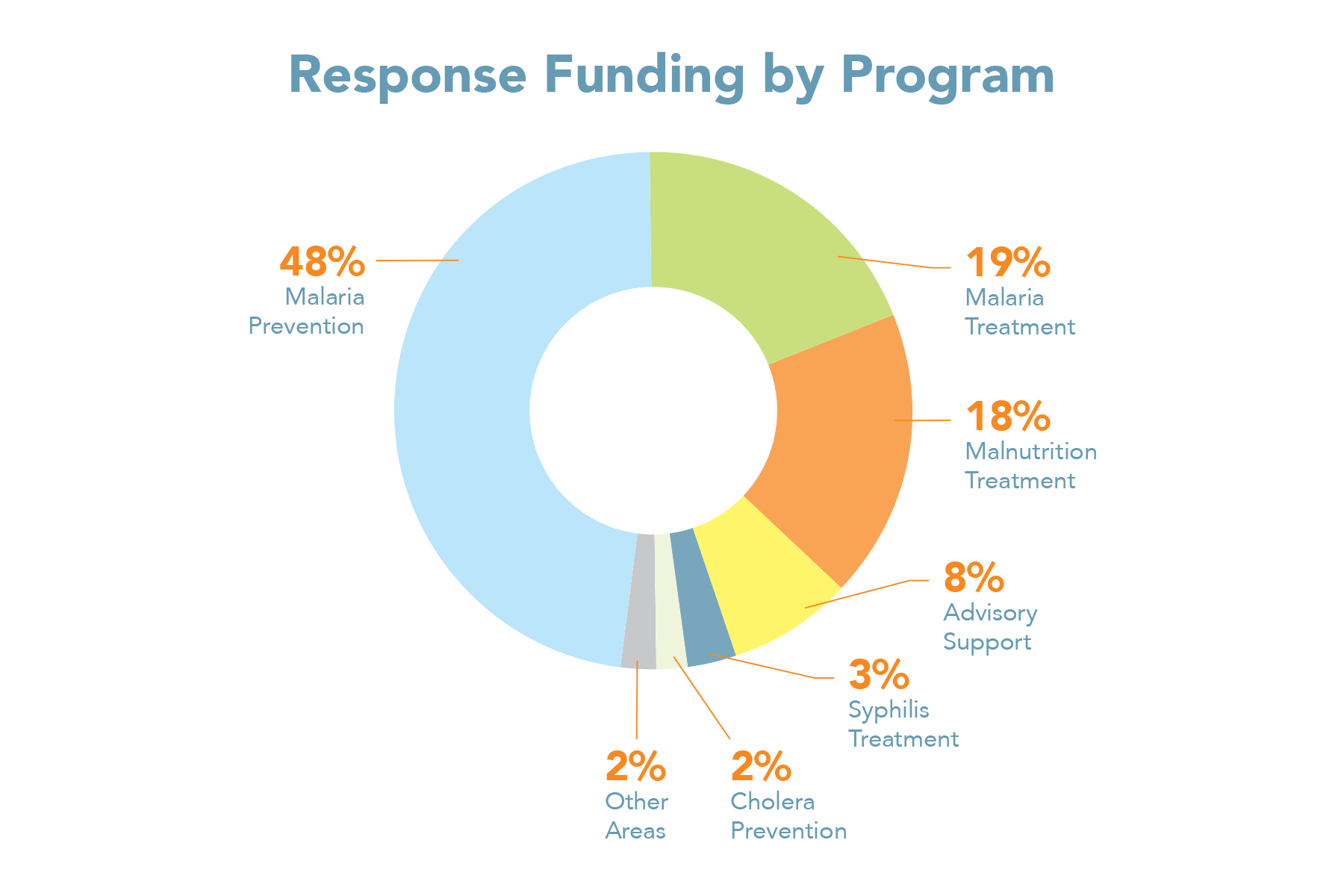
Donut chart with categories corresponding to the percentage of response funding for each program area
In response to funding shortfalls, we funded time-sensitive opportunities to ensure that cost-effective programs could continue. And in response to substantial uncertainty and in expectation of growing needs, we engaged in efforts to research new areas and prepare ourselves for the future. You can read some examples of our response later in this post.

Read More

Podcast Episode 17: Bridging an Uncertain Time for a Lifesaving Program

Despite significant progress over the past several decades, malaria remains a leading cause of death globally for children under five. This year’s cuts to foreign aid funding disrupted highly effective programs to prevent malaria, such as seasonal malaria chemoprevention (SMC).

SMC provides antimalarial medication to children under the age of five during the rainy season when malaria transmission is highest, reducing their risk of dying from the disease. Malaria Consortium’s SMC program, which is one of the most cost-effective programs our researchers have identified, has been one of GiveWell’s Top Charities since 2016, and we’ve recommended more than $500 million in grants for the program since that time.

SMC is only delivered during a specific period each year when malaria transmission is highest. The campaigns require careful planning and preparation on a specified timeline to ensure that the drugs are ready to distribute during that window. The funding freeze that started in January jeopardized 2025 SMC campaigns in several countries because of the disruption to funding for these time-sensitive pre-campaign activities.

In this episode, GiveWell CEO and co-founder Elie Hassenfeld speaks with Program Officer Natalie Crispin about how GiveWell responded quickly and flexibly to ensure that SMC campaigns moved forward this year.

Read More

Podcast Episode 11: A Frontline View of Foreign Aid Cuts with CHAI’s CEO

Foreign aid funding cuts are reshaping the global health landscape, creating urgent funding gaps and forcing difficult prioritization decisions across health systems worldwide. To understand the real-world effects, it’s essential to hear from the organizations working on the front lines with government partners to navigate the funding crisis. The Clinton Health Access Initiative (CHAI) is a large global health nonprofit and an important GiveWell partner in this work.

In this episode, GiveWell CEO and co-founder Elie Hassenfeld speaks with CHAI CEO Buddy Shah about how the aid cuts are affecting health programs and what it takes to build a strategic response. They discuss the hidden complexities of the funding landscape, the difficult choices governments are being forced to make, and what this pivotal moment could mean for the future of global health.

Read More

Podcast Episode 10: The Fragile Foundations of Global Health Data

GiveWell’s ability to find and fund highly cost-effective health programs relies on a foundation of credible data. A key source of that data, the Demographic and Health Surveys (DHS), recently had its primary funding from USAID discontinued. This creates the potential of a significant challenge for GiveWell’s research—and for evidence-based grantmaking across the global health sector.

In this episode, GiveWell CEO and co-founder Elie Hassenfeld speaks with Senior Researcher Adam Salisbury to explore the implications of this funding gap. They discuss how the DHS program works, why it’s essential for informed decision-making, and how GiveWell is responding to the growing limitations of public health data.

Read More

Podcast Episode 8: Malaria Funding at a Crossroads

Malaria is the cause area where GiveWell has directed the most funding over our 18-year history. We’ve recommended over $1 billion to malaria programs, which we estimate will avert over 200,000 deaths, mostly in young children, through support for programs like Against Malaria Foundation’s insecticide-treated nets and Malaria Consortium’s seasonal malaria chemoprevention.

Despite significant progress against malaria in the past 25 years (reducing annual deaths from 900,000 to 600,000), malaria is still a leading cause of death globally for children under five. The current status of malaria prevention—and all the progress that’s been made—is now in a precarious position. Significant reductions in funding from key donors like the US President’s Malaria Initiative and the Global Fund are anticipated and threaten to create substantial new gaps in life-saving malaria programs.

In this episode, GiveWell CEO and co-founder Elie Hassenfeld speaks with Program Officer Alex Bowles and Senior Researcher Rosie Bettle about the impacts these funding cuts could have. They offer a timely look at the uncertainty of the funding landscape, the life-saving malaria programs that are most at risk, and how GiveWell is leveraging its expertise to respond to emerging needs.

Read More