 This blog has become part of a blogging “community.” We read each other, we refer to each other, we comment on each others’ posts, and we probably think of each other as the “other charity bloggers.” I’m talking mostly about:
- Tactical Philanthropy
- Philanthropy 2173
- White Courtesy Telephone
- GiftHub (and its weird sister, Wealth Bondage)
- The Nonprofiteer
I think all of the blogs above are intelligent, sometimes entertaining, and generally worth reading for a charity nerd such as myself. I like having people to respond to and people responding to me; being part of this community is been a reliable way to get dialogue, as well as pick up readers. That’s cool. But I have two major problems with this set of people.
1. It’s just too small, and I think the people are too similar to each other. That’s been driven home to me by Sean’s recent interview with William Schambra. Read it, if someone holds a gun to your head and forces you to. In brief, the participants are acting like the fact that this guy affiliates with “conservatives” rather than “liberals” means that this affiliation is the only thing worth discussing about or around him, that every word he says must be nothing more than snake oil designed to protect conservative interests. They’ve used their stereotypes to come up with ludicrous, implausible interpretations of his motives, rather than challenging what he says to get at whatever biases he does have. There’s no recognition that conservatives sometimes think about things other than cutting taxes and oppressing minorities (and that some conservatives support neither of these things). To me, that’s a sign of insulation from other points of view.
(Can you tell I’m annoyed? Guys, if you’re reading this, I’ll get over it. Here’s an e-hug: (). But I do think you’re insulated.)
2. More importantly, none of these blogs ever talk about how to help people, which is an odd quality for a group of “philanthropy blogs.” My original vision for this blog was as a place to discuss tutoring vs. charter schools, bednets vs. water pipes. It hasn’t happened so far, mostly because we had to halt our research on these issues in order to focus on the business side of The Clear Fund. It still may not happen for a little while, because I’m just starting to learn about these issues myself, and at this point anything I wrote about them would largely be in a vacuum. But as we shift our focus to research, I expect this to change.
So, I don’t want to ditch the friends I have, but I want some new ones too. I do read a ton of other blogs, but the only ones I know of that discuss how to help people are Beyond Philanthropy and the Google.org blog (which is showing early signs of flakiness). Any suggestions?
 One of the things we need to do, as a transparent grantmaker, is to take the intuitions and biases that make us prefer one charity over another and make them explicit, so that everyone is aware (as much as possible) of the principles that drive us. I’m going to be doing this “out loud” on our blog; please bear in mind that what I write here is unfiltered and personal (i.e., I am expressing my own views, not those of The Clear Fund, whose short-term decisions involve Elie and whose ultimate decisions involve the entire Board).
 Straw Man: When you say you prefer charity (helping individuals) to philanthropy (addressing root causes), do you mean you ALWAYS prefer short-term to long-term solutions, and that all research/advocacy/outreach programs should be illegal?
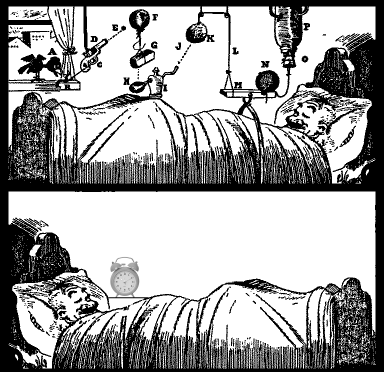 When you’re trying to accomplish as much good as possible with your dollar, as in everything else, you have to factor in certainty (the same reason that people buy stocks and CDs instead of just lottery tickets). Of course I’d love to cure cancer or save Darfur, and I’d rather eliminate a disease than save 100 people from it. But as a strategy gets longer-term and gets more moving parts, my confidence in it falls exponentially. And my confidence falls even faster when all I know about a strategy is that it involves “research” (competing with thousands of other causes for the best scientists), “advocacy” (competing for political airtime), or “raising awareness” (good luck if you don’t have Al Gore or Michael Moore in your corner). The burden of proof should be high for a direct-service charity, but it should be 1000x higher for strategies along these lines – no matter how wonderful the goal.